
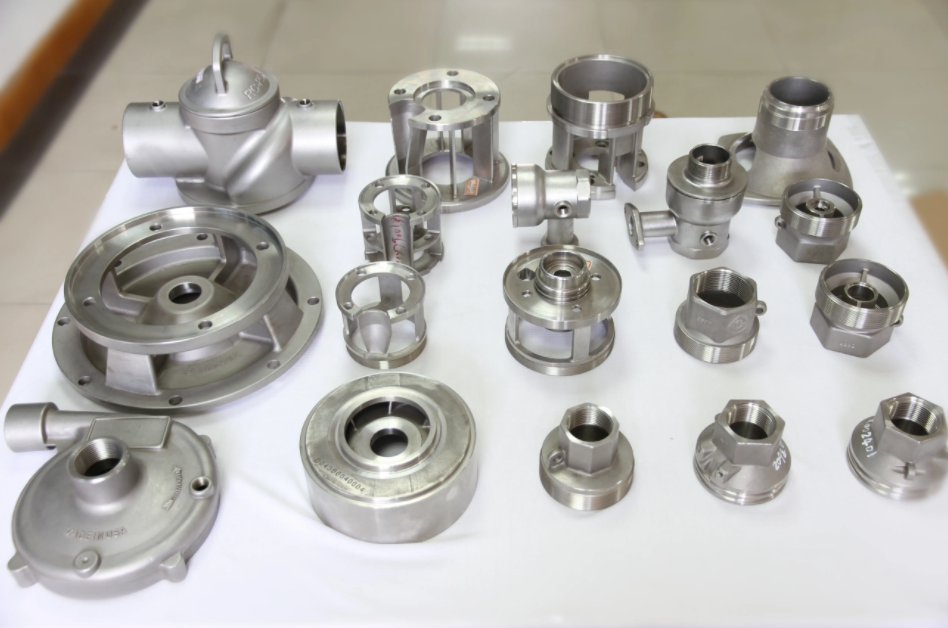
What is surface treatment?
Surface treatment is an additional process applied to the surface of a material in order to add functions such as rust and wear resistance or to improve decorative properties to enhance its appearance.
Painting applied to the body of an automobile, printing information such as the manufacturer's name on the surface of home appliances, "plating" under the painting of guardrails, etc., are typical examples of surface treatment.
Heat treatments applied to metal parts such as gears and blades, such as quenching, are also classified as surface treatments.
Surface preparation can be broadly divided into removal processes, such as scratching or melting the surface, and additive processes, such as painting, adding other things to the surface.
Advantages of Electrolytic Plating
low cost
produces a glossy finish
produce corrosion resistance
Plating speed is fast
Electroplating on a variety of metals and alloys
Low thermal impact on metallization
The role of power supply in surface treatment
Today, surface treatment technology is used in a variety of industries. Electroplating, in particular, will continue to expand its range of applications and requires high-quality, economical technology.
Electrolytic plating uses electrolysis, which requires a power source that can provide direct current (DC) power. If the voltage is unstable, the deposition of the coating will also be unstable, so voltage stability is required to improve the quality of the product.
Also, the amount of electroplating deposited is proportional to the accumulated current, so it is important to be able to efficiently flow more current.
Also, since electroplating uses chemicals, the environment is prone to rust and corrosion due to corrosive gases and high humidity. Therefore, the power supply enclosure not only needs to be resistant to the environment, but also the power supply needs to be installed in a different location than the room where the plating is performed.