
Are you tired of living in a world without electricity in urban areas? Do you want to explore sustainable and eco-friendly options for meeting your energy needs, regardless of whether or not the power grid reaches your remote community in Canada? Look no further than Off Grid solar systems! In this blog post, we'll dive into the different Off Grid solar systems perfect for powering homes and businesses in even the most isolated locations. Get ready to discover how renewable energy can transform your life - wherever you may live!
What is an Off Grid Solar System?
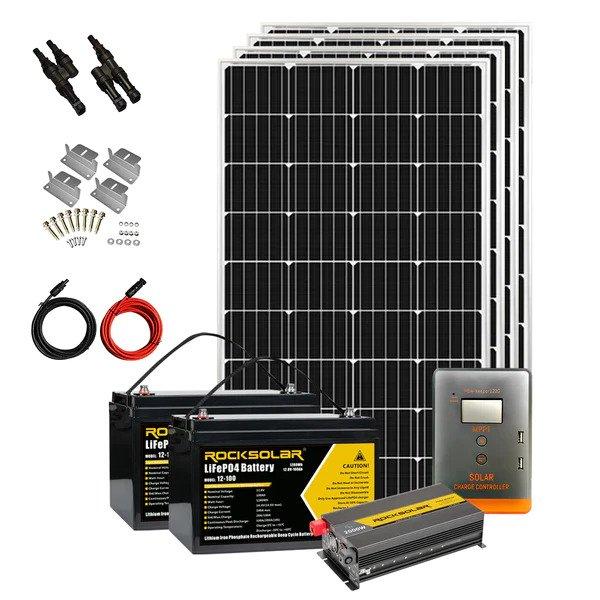
An solar off-grid system is a solar power system that is not connected to the electric grid. Off Grid systems are usually used in remote locations where connecting to the grid is not practical or economical. Off Grid systems can be used for various applications, including powering homes, businesses, and community infrastructure. Off Grid solar systems typically consist of solar panels, batteries, a charge controller, and an inverter. Solar panels generate electricity from the sun, which is stored in batteries. The charge controller regulates the flow of electricity from the solar panels to the batteries. The inverter converts the stored DC electricity in the batteries into AC electricity which can be used to power lights, appliances, and other equipment. Off Grid systems can be customized to meet the specific needs of the user. The size of the system will depend on factors such as how much electricity is needed and how many hours of sunlight are available each day. Batteries can be added to provide backup power during extended periods of cloudy weather or at night. Off Grid solar systems are an increasingly popular option for powering remote communities in Canada. They offer a clean and renewable energy source that can meet a community’s energy needs without dependence on the electric grid.
Why Are Off Grid Solar Systems Important for Remote Communities in Canada?
Off Grid solar systems are important for remote communities in Canada because they provide a clean and renewable energy source that is not reliant on the provincial grid. Remote communities often have difficulty accessing traditional forms of energy, so Off Grid solar systems can help improve residents' quality of life. Additionally, off grid solar systems can create jobs and economic opportunities in remote communities. Solar energy is becoming increasingly popular in Canada, as it helps to reduce the country’s overall carbon footprint. Off Grid solar systems are also low-maintenance and provide an affordable energy source for remote communities. Ultimately, off grid solar systems offer a reliable and sustainable option for remote communities in Canada.
What Are the Different Types of Off Grid Solar Systems?
There are two main off grid solar systems: stand-alone and grid-connected. Stand-alone systems are not connected to the electrical grid and are typically used in remote locations without access to the grid. These systems are usually more expensive than grid-connected systems, but they offer the advantage of operating independently from the grid. Grid-connected systems are connected to the electrical grid and can provide power to a community even when the grid is down. These systems are less expensive than stand-alone ones but require a reliable electrical grid connection.
How to Choose the Right Off Grid Solar System for Your Community?
If you're looking to install an off grid solar system canada for your community, there are a few things you'll need to consider to ensure you choose the right one. Here are a few factors to consider: The size of your community: The first thing you'll need to consider is the size of your community. This will determine the solar system's size and capacity to meet your energy needs. Your energy needs: Once you know the size of your community, you can start to look at different Off Grid solar system options and compare their capacity and output to see which one will best meet your energy needs. The climate: Another important factor to consider is the climate in your area. This will affect how much sunlight your panels will receive and, therefore, how much power they'll be able to generate. You'll need to ensure that the solar system you choose can generate enough power even in the darkest winter months. Your budget: Finally, you'll need to consider your budget when choosing an off grid solar system. Various options are available, so it's important to find one that fits your price range while still providing enough power for your community's needs.
Conclusion
Off Grid solar systems are becoming increasingly popular in remote communities in Canada due to their affordability, dependability and low environmental impact. By exploring the different types of Off Grid solar systems available, it is possible to find a system that can meet the unique needs of each community while providing reliable, sustainable energy for years to come. With proper installation and maintenance, an Off Grid solar system can provide safe, clean power for remote Canadian homes and businesses far into the future.